
The quick answer to this question is that we need to find ways of working together to address complex challenges, often called 'wicked problems'. When I say 'we' I mean academics from different disciplines, technicians, and also practitioners. My quick answer may seem a little wishful, though, when the challenge is an ecological one that involves changing our relationship to tiny animals low down in the pecking order of life forms (in popular thinking) with whom we cannot possibly collaborate: insects.
Or can we?
For a slightly longer explanation read on…
Let's start with an academic problem though.
Working together sounds fun but it is hard to do even with curious humans with lots of goodwill in today's financially-challenged, siloed universities, where time is a scarce commodity, funding difficult to get, jobs at risk, and when academic promotion still tends to rely on accumulating publications in top-ranked journals in one's discipline.
2021 saw the publication in the UK of Sir Paul Nurse's Independent Review of the UK's Research, Development and Innovation Organisational Landscape, which describes the cultural change that he thought was needed to tackle today's most challenging problems. Nurse recognised just how siloed academia had become. Permeability was a buzzword (no pun intended) in 2021. In 2023 Newcastle University's Humanities Research Institute (short form: NUHRI), of which I was then co-director, published its own response to the challenge of helping academic researchers get out of their siloes for HEPI (the UK's Higher Education Policy Institute): 'Challenge labs — a new way of doing teaching and research'.1 A challenge lab, as we understood it, creates a space, virtual and/or real, in which diverse disciplines can explore a chosen challenge through structured conversations, with a shared goal of co-creating an output together.
The aim of a challenge lab is to forge better and more nourishing connections across disciplines, and between different knowledge holders or 'experts'. The point is to work across borders, and to challenge hierarchical and siloed thinking, whether generational, faculty-based, academic/practitioner and/or technician or teacher/researcher/student.
Bee-ing Human, which was born at Newcastle University, is an example of a challenge lab in practice. The 'wicked problem' we set out to address is an ecological one: the fact that insect numbers are declining at an alarming rate, risking the human food supply. This is a global phenomenon,2 and a major cause of it is well known: pesticides. But how many people understand the essential role insects play in maintaining the ecosystem on which we depend? Insects 'pollinate crops and wild plants, recycle nutrients, maintain healthy soils, control pests, and form the base of the food web for birds, bats, fish, and other wildlife'. How many people understand the finely balanced relationship between insects and humans, and the urgent need to protect them in order to protect ourselves? So urgent is the problem in the UK that a House of Commons report in 2024, included among its recommendations the need to 'communicate not only the reality of insect decline but the attainable steps that can be taken to tackle it'. But this is not just about communicating and following expert advice; we also need to create understanding and empathy to change how we interact with insects. Perhaps a good place to start is with ourselves, thinking about how we can interact and connect.
This is the challenge that Bee-ing Human took up, focussing on one of our best known pollinators, honey bees. (All insects need their champions though!) One of the ways scientists have been trying to address this challenge is by exploring the possible sentience of invertebrates, developing 'an empirical and scientific framework' to do so, one that includes 'neurobiological and behavioural criteria'. As Luigi Baciadonna and Vivek Nityananda explain in our Bee Book this research has 'significant ethical implications for [the] treatment and welfare [of bees], including regulations as to how humans should interact with them'. Work on the sentience of cephalopods and decapods, for example, led to the adoption of the UK's Animal Welfare (Sentience) Act in 2022. Why not other kinds of invertebrate? Indeed, scientists are now exploring whether bees (and wasps) meet the established neurobiological and behavioural criteria for sentience. The work conducted in the science lab for this project is part of that.
But we can't leave all the work to our science colleagues to do, especially since changing our relationship to bees — and other tiny animals — is likely to involve more than receiving and accepting new information from experts. Insects are entangled in our lives already in a myriad of ways, and it is not just today's biologists who recognise this. So too do the beekeepers we have worked with in North East England, and the artists and scientists from the US, whose collaborations with bees feature in our Bee Book. This entanglement has a past as well as a present and a future. This is also what Bee-ing Human is about. We have been building connections between scientists, humanists and artists, and academics and practitioners, and between the past and the present.
Past and the present? At the heart of our project is the interconnected, multidisciplinary book of a seventeenth-century bee-keeper and natural philosopher, trained in the sound arts of grammar, rhetoric, and music. The Feminine Monarchie has inspired the design of our own book, including our generous use of hyperlinks to help you move around freely and make your own connections. Butler understood bees as 'sentient' but not in any way that a modern scientist would find acceptable so concerned are they to challenge 'anthropomorphic notions'. However, he did understand something else we think is important, which remains relevant today: not only that understanding the natural world requires a multisensory approach — something Butler shared in common with other renaissance natural philosophers — but that communicating it should too. For Butler, knowing involved feeling (both affective and physical), an act of 'inter-species empathetic connection and care', as PhD student Jess Dunmore explains in Bee-hold, while offering a 'cautionary tale': touch, she adds, also 'undermines mutual exchanges between the human and more-than-human'. For Butler, though, it also involved listening, as Bennett Hogg argues in his study of bees in the Early Modern Soundscape, something scientists are also doing again, using different instruments of course.
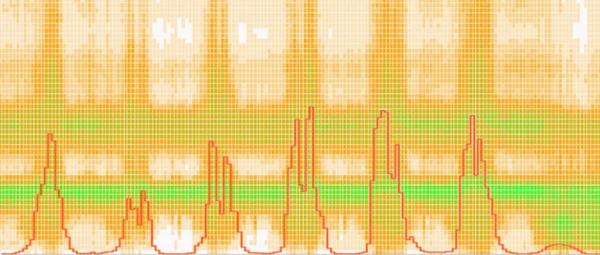
That's why we think the renaissance histories of music, rhetoric, and natural philosophy, have a place in our multidisciplinary project, and also why a book printed in 1623, exploring, among other things, the emotions of bees, has inspired the design of a digital book that includes scientific work on bee sentience 400 years later.
There are other connections we would like to draw to your attention, taking us back to our opening point, that the decline in insects is a global problem: we are grateful to our friends in the UK, Italy, France, India and the US for their contributions to our book.
Bee-ing Human is an ongoing endeavour, and more content and data will be added in 2026. We are still checking the transcriptions of the 1609 and 1623 texts, which are part of our born-digital edition. The complete datasets for the scientific work will be available from our website in the Spring. We will also be looking for future funding to develop a Virtual Reality Experience (VRE ) to explore humans from a bee's perspective … More seriously, we welcome sharing other researchers' work, making our Bee Book an inclusive space for anyone who wants to collaborate with (or think about) bees.
- For examples of NUHRI's challenge labs see here.↩
- See Bug Life: Saving the small things that run the planet↩